
The growth of Thessaloniki in antiquity was not accidental. Geography played a major role, but one particular feature shaped the city’s development more than anything else: the Via Egnatia.
Built in the 2nd century BCE, this Roman road crossed the Balkan Peninsula and connected the Adriatic Sea with the eastern provinces of the empire. It was one of the longest and most important routes in the Roman world.
And Thessaloniki stood directly along it.
Because of this position, the city quickly became a place where people passed through, stopped to trade, or prepared for the next stage of their journey.
The Via Egnatia essentially linked two halves of the Roman Empire. Starting on the Adriatic coast, the road ran across northern Greece and continued toward Byzantium. Anyone traveling between western territories and the eastern Mediterranean would eventually pass along this route. For Thessaloniki, this meant constant movement.
Merchants arrived with caravans of goods. Officials traveled between provinces. Soldiers marched east or west depending on where they were needed. The road never truly stood empty. Gradually, the city became a natural crossroads.
The economic effects of the Via Egnatia were easy to see. Traders moving across the Balkans often stopped in Thessaloniki to buy, sell, or exchange goods. Agricultural products from nearby regions mixed with imported materials, textiles, and luxury items coming from other parts of the empire.
Markets expanded. Commercial districts grew. The harbor made the situation even better. Goods arriving by land could easily be loaded onto ships and transported across the Aegean Sea. In other words, Thessaloniki connected land trade and maritime trade at the same time.
Roman roads were never built only for commerce. They also served military needs. The Via Egnatia allowed Roman armies to move quickly across the Balkans. Troops could reach distant provinces faster, and imperial authorities could respond more efficiently to threats or rebellions.
Because Thessaloniki sat along this road, it naturally became a strategic location for Roman administration. Officials, messengers, and soldiers all passed through the city regularly. Thessaloniki was not just a trading center—it was also part of the empire’s communication network.
The road also influenced the physical layout of Thessaloniki. Major routes often shaped how ancient cities developed, and the Via Egnatia acted as a central axis for movement through the urban space. Important buildings appeared along or near the route.
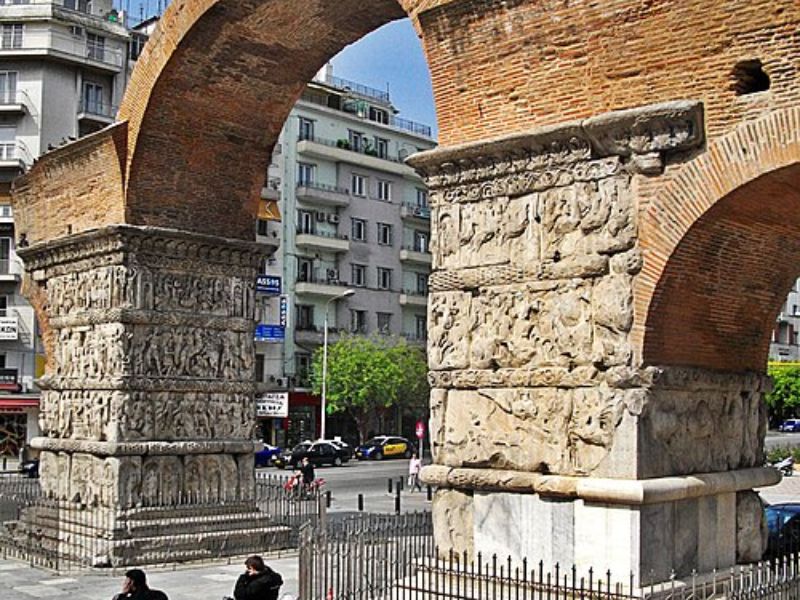
One example is the Arch of Galerius, which stood close to this main road. Monuments like this were not placed randomly. They were built where people would see them. Where traffic moved, the city grew.
The Roman road itself no longer survives in its original form throughout the modern city. However, its path has not completely disappeared.
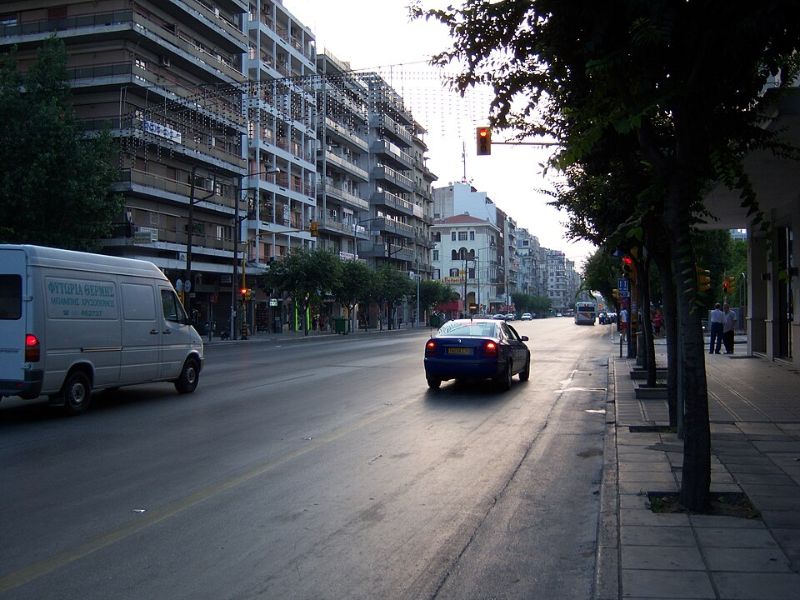
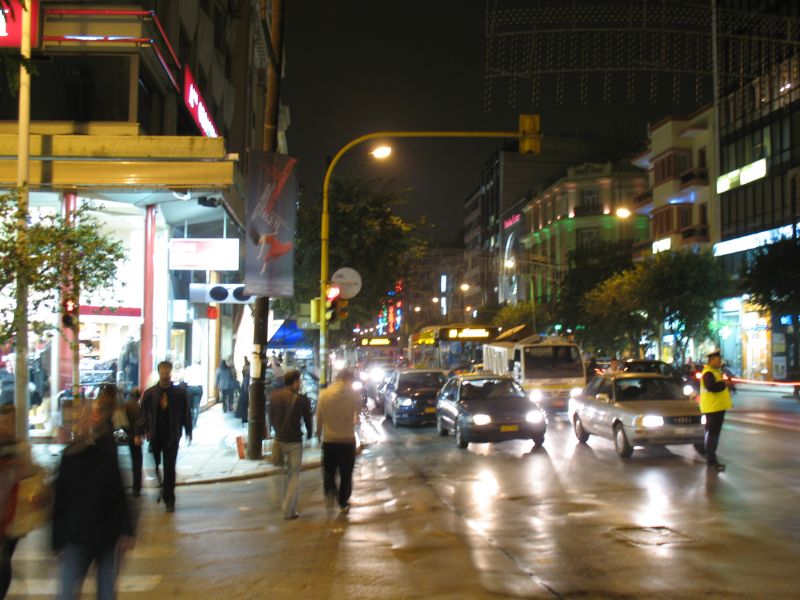
Today, Egnatia Street roughly follows the same route as the ancient Via Egnatia and remains one of the busiest streets in Thessaloniki. Thousands of people pass along it every day without realizing they are walking over a path shaped almost two thousand years ago. History rarely disappears entirely. Sometimes it simply changes form.
Without the Via Egnatia, Thessaloniki might never have developed into such an important city. The road connected distant parts of the Roman Empire, brought merchants and travelers into the city, and supported its economic growth for centuries. It also strengthened the city’s strategic value for Roman administration.
Even today, the legacy of the Via Egnatia still shapes Thessaloniki’s geography and historical identity. In many ways, the road helped define the city itself.
We use cookies to improve your experience on our site. By using our site, you consent to cookies.
Manage your cookie preferences below:
Essential cookies enable basic functions and are necessary for the proper function of the website.
Stripe is a payment processing platform that enables businesses to accept online payments securely and efficiently.
Service URL: stripe.com (opens in a new window)
WooCommerce is a customizable eCommerce platform for building online stores using WordPress.
Statistics cookies collect information anonymously. This information helps us understand how visitors use our website.
Google Analytics is a powerful tool that tracks and analyzes website traffic for informed marketing decisions.
Service URL: policies.google.com (opens in a new window)
SourceBuster is used by WooCommerce for order attribution based on user source.
You can find more information in our Privacy Policy and Privacy Policy.