
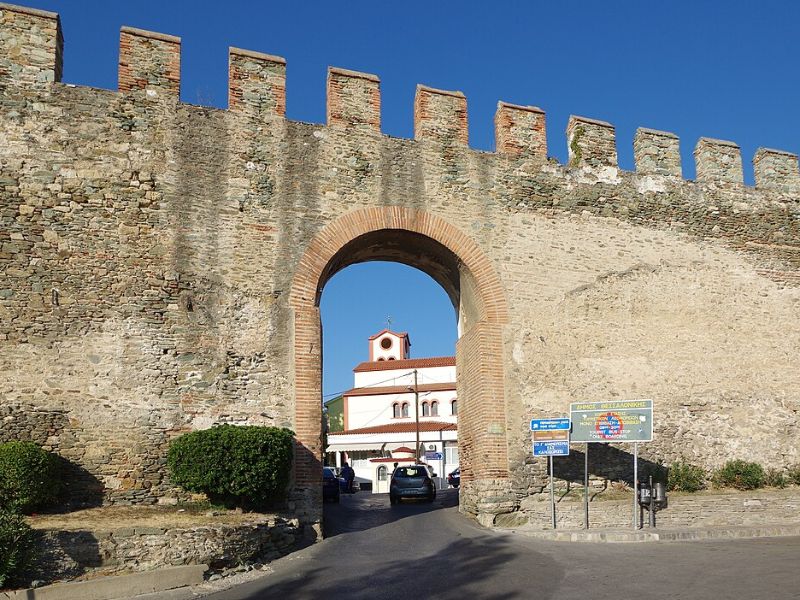
High above the modern streets, Ano Poli in Thessaloniki holds onto a different rhythm. While much of the city was rebuilt after the fire of 1917, this hillside district kept its older shape. The result is immediate. The streets narrow. The angles shift. The city below feels close, yet somehow separate.
Walking through Ano Poli in Thessaloniki is not simply about reaching viewpoints or monuments. It is about moving through a landscape where architecture and daily life have grown together over centuries. The atmosphere feels quieter here — not silent, but softened by elevation and stone.
The route often begins at the Eptapyrgio fortress, the highest accessible point of the district. From its walls, Thessaloniki spreads outward toward the Thermaic Gulf. Behind you, the heavy stone structures recall centuries of defence, surveillance and control.
This acropolis formed the final stronghold of the city, connected directly to the Byzantine fortifications that once enclosed Thessaloniki. As you begin descending, the path naturally follows parts of these walls. Their scale is difficult to ignore. Built mainly during the early Byzantine period, they once defined the entire perimeter of the city.
Walking beside them creates a quiet sense of continuity. The walls no longer defend, yet they still shape movement. Past and present overlap without announcement.
Further along, the Trigonion Tower offers one of the clearest views across Thessaloniki. The sea opens wide below. On clear days, Mount Olympus appears faintly in the distance. The city feels expansive from here, yet distant at the same time.
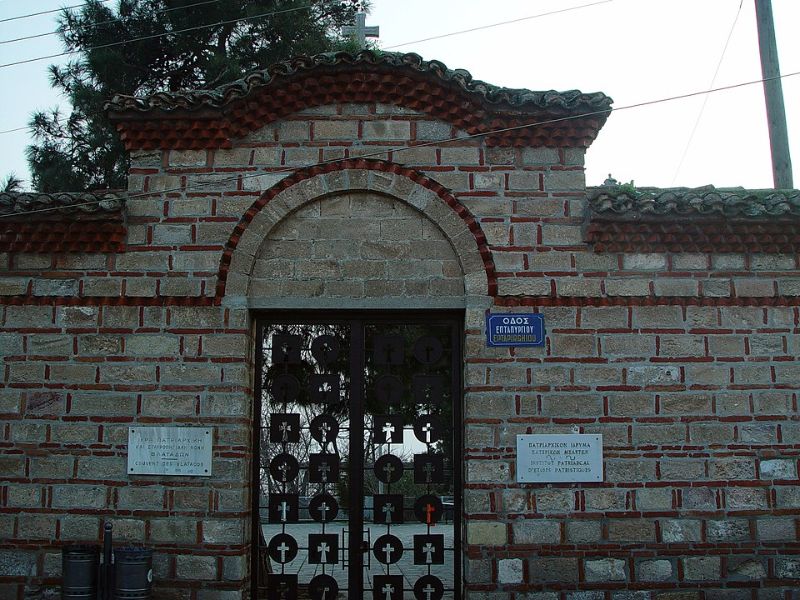
Descending again, the atmosphere shifts. Defensive architecture gradually gives way to something more contemplative. The Vlatadon Monastery appears surrounded by greenery, its presence steady and understated. Built in the 14th century, it remains active, not simply preserved.
Within its grounds, the noise of traffic fades. The experience slows. The route through Ano Poli in Thessaloniki becomes less about elevation and more about pause.
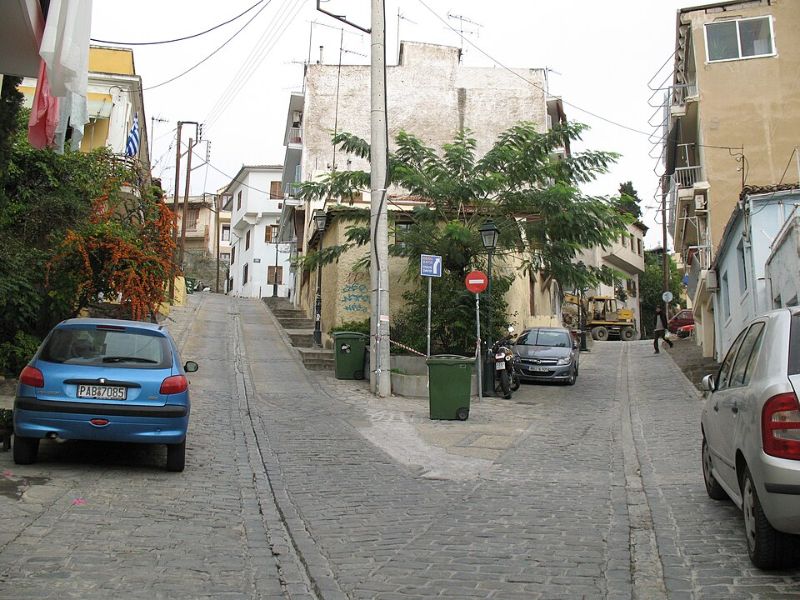
Leaving the main landmarks behind, the district reveals its most personal character. Streets turn into stone steps. Alleys curve unexpectedly. Courtyards sit hidden behind wooden gates.
Ano Poli in Thessaloniki is the only part of the city where the original urban fabric survived the 1917 fire. The layout feels organic, shaped by necessity rather than formal planning. Houses reflect Byzantine and Ottoman influences — enclosed balconies, wooden details, layered rooftops.
As you walk, glimpses of the sea appear between buildings. The perspective changes constantly. Nothing feels aligned for symmetry. The neighbourhood unfolds in fragments.
Further downhill lies the Tsinari area. Here, the historic atmosphere blends seamlessly with daily routine. Small tavernas open onto narrow streets. Conversations carry through open windows.
In this part of Ano Poli in Thessaloniki, the district feels lived-in rather than curated. The pace adjusts naturally. You pause without intending to. The experience becomes less observational and more participatory, even in small ways — a coffee stop, a short conversation, a moment in the shade.
As the route returns toward the lower city, the transition is noticeable but gradual. Streets widen. Traffic noise grows louder. Modern façades replace older stonework. Yet something of the upper district remains with you.
Exploring Ano Poli in Thessaloniki reveals more than preserved walls or scenic viewpoints. It uncovers layers of identity — defensive, spiritual, residential — all existing within the same hillside. The district does not feel like a museum set apart from the city. It feels inhabited, continuous, and quietly enduring above the faster rhythms below.
We use cookies to improve your experience on our site. By using our site, you consent to cookies.
Manage your cookie preferences below:
Essential cookies enable basic functions and are necessary for the proper function of the website.
Stripe is a payment processing platform that enables businesses to accept online payments securely and efficiently.
Service URL: stripe.com (opens in a new window)
WooCommerce is a customizable eCommerce platform for building online stores using WordPress.
Statistics cookies collect information anonymously. This information helps us understand how visitors use our website.
Google Analytics is a powerful tool that tracks and analyzes website traffic for informed marketing decisions.
Service URL: policies.google.com (opens in a new window)
SourceBuster is used by WooCommerce for order attribution based on user source.
You can find more information in our Privacy Policy and Privacy Policy.