
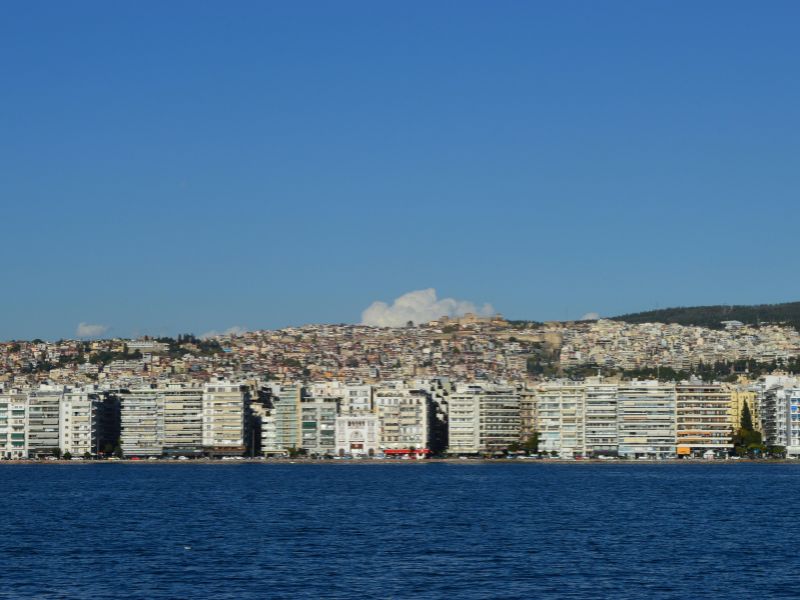
It’s hard to imagine today, but the Thessaloniki waterfront was once a place most people avoided. For much of the 19th and 20th century, the coastline worked strictly as a zone of labor — filled with warehouses, military buildings, rail lines, and industrial clutter. It wasn’t meant for strolling, relaxing, or watching sunsets. It certainly wasn’t the symbol of the city that it is now.
The transformation of this shore tells not only the story of better urban planning, but also how Thessaloniki finally reconnected with the one thing that shaped its fate from the beginning: the sea.
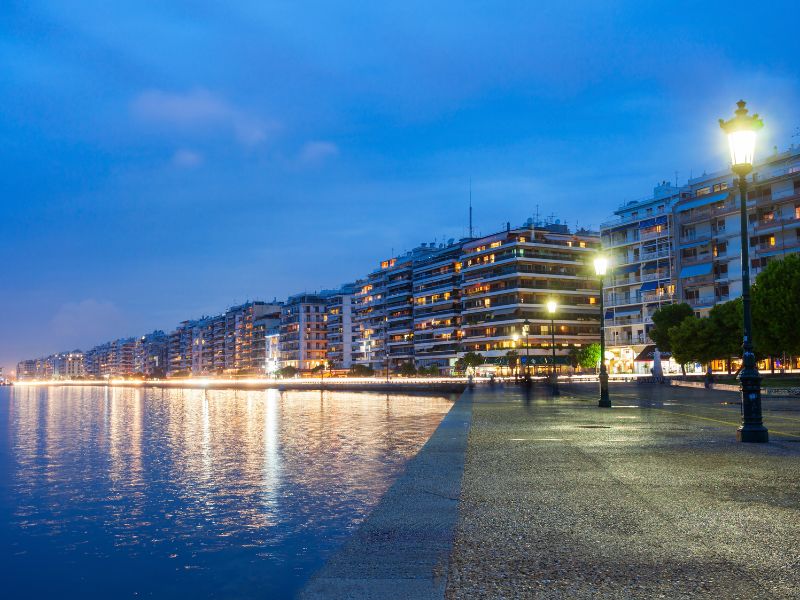
In earlier centuries — the Roman and Byzantine eras especially — the sea reached much deeper into the urban fabric. The harbor wasn’t a boundary; it was part of the city’s daily rhythm. Fishermen, merchants, soldiers, and travelers all lived with the water right beside them.
Fast forward to the 20th century, and the picture was completely different. Much of the coastline had become fenced off or inaccessible. Even longtime residents remember a Thessaloniki where you couldn’t just “go down to the sea.” You either saw it from a distance or not at all.
This disconnection wasn’t natural. It was the result of industrial needs swallowing the shoreline, leaving citizens with almost no public space by the water.
By the late 1990s, the idea began circulating among architects and local planners:
What if Thessaloniki took its waterfront back?
The concept grew, gained support, and eventually turned into one of the largest urban redesign efforts in modern Greek history. The goal was not only to beautify the coastline but to open it — fully and permanently — to the public.
Architects Prodromos Nikiforidis and Bernard Cuomo designed the New Waterfront, and the plan unfolded over several years. The vision behind it was simple but ambitious:
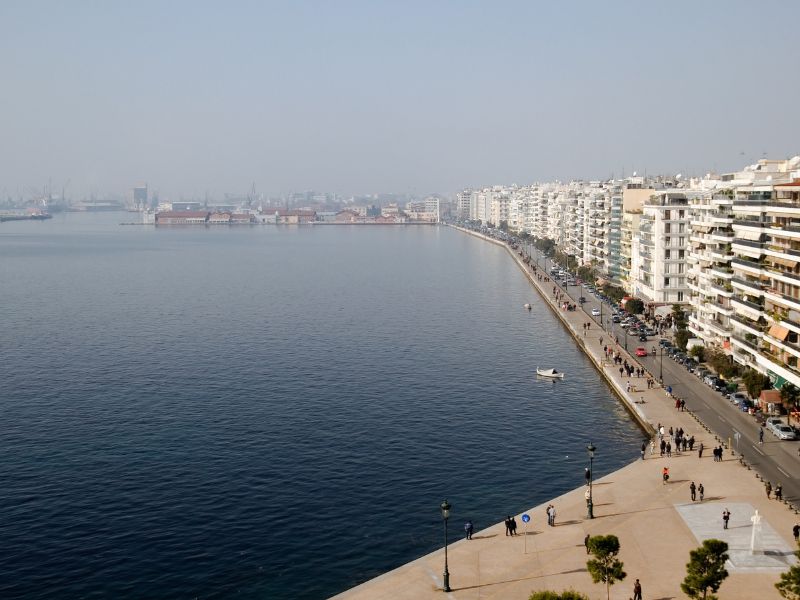
Today, the promenade stretches for more than 3.5 kilometers — a continuous, open ribbon running from the White Tower to the Concert Hall.
Along the way, twelve themed gardens add character and atmosphere. Each one feels distinct:
None of these spaces feel repetitive. They were designed like chapters in a book, offering different moods as you walk.
What makes the Thessaloniki waterfront so striking isn’t only its design. It’s the intention behind every choice.
The materials — weathered steel, pale stone, Mediterranean plants — were selected to fit the city’s climate and character. The lines are soft and curved, guiding the eye naturally toward the water. Even the benches are shaped in a way that encourages lingering, not just passing by.
It’s an open space that invites everyone. No gates. No divisions. Just a long, generous stretch of city where people can breathe.
The waterfront has become the heart of modern Thessaloniki. It’s a daily meeting point, a magnet for joggers, cyclists, students, and families. Visitors don’t just see it — they experience it.
It’s also a cultural stage. Small concerts, outdoor exhibitions, gatherings, and festivals frequently take place along this strip. The city finally has a seafront worthy of its personality: lively, expressive, and welcoming.
In 2014, the redesign received the IFLA Europe Landscape Architecture Award, a recognition of how effectively it blended sustainability with heritage.
Perhaps the most meaningful change is emotional. Thessaloniki and its sea are together again.
People sit on the marble edges to watch the sunset. Couples stroll in the evening breeze. Children run between sculptures. Tourists pause at the statue of Alexander the Great — a reminder of the city’s ancient roots meeting its modern rhythm.
This new coastline is not just a promenade. It’s a restoration of something that was quietly missing for generations.
The Thessaloniki waterfront shows what can happen when a city chooses openness over obstruction. Instead of erasing its past, it made space for it — literally. Every garden, pathway, and open view carries the same message: A city that once turned away from the water now lives beside it again. Thessaloniki found its sea — and, in many ways, found itself.
We use cookies to improve your experience on our site. By using our site, you consent to cookies.
Manage your cookie preferences below:
Essential cookies enable basic functions and are necessary for the proper function of the website.
Stripe is a payment processing platform that enables businesses to accept online payments securely and efficiently.
Service URL: stripe.com (opens in a new window)
WooCommerce is a customizable eCommerce platform for building online stores using WordPress.
Statistics cookies collect information anonymously. This information helps us understand how visitors use our website.
Google Analytics is a powerful tool that tracks and analyzes website traffic for informed marketing decisions.
Service URL: policies.google.com (opens in a new window)
SourceBuster is used by WooCommerce for order attribution based on user source.
You can find more information in our Privacy Policy and Privacy Policy.