
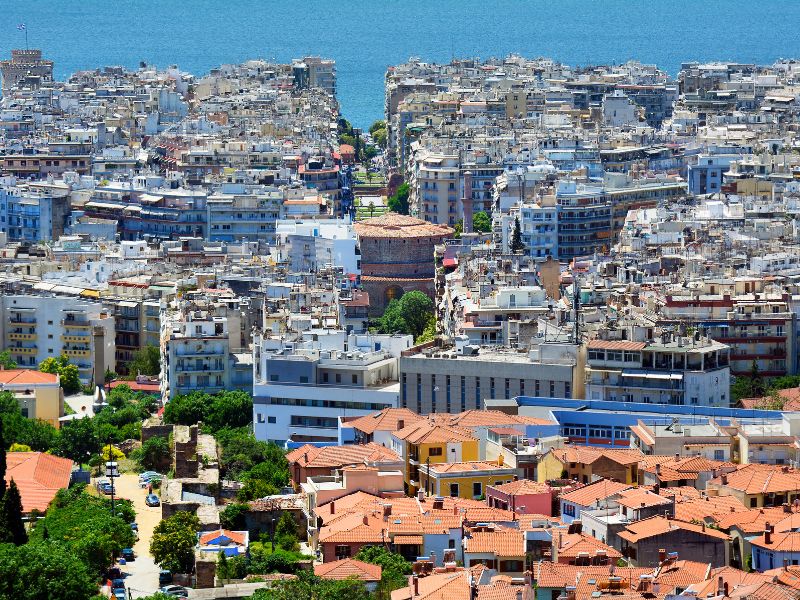
The history of Thessaloniki begins where the water meets the land. When King Cassander founded the city in 315 BCE, he knew exactly what he was doing — choosing a sheltered bay that connected Macedon to the wider world. Trade ships, soldiers, pilgrims, and travelers came and went for centuries, making the shoreline the true engine of the city.
But if you compare today’s open, elegant promenade with the older coastline, you’d hardly believe they were the same place. Thessaloniki’s bond with the sea has shifted many times, and every change reveals something essential about the history of Thessaloniki itself.
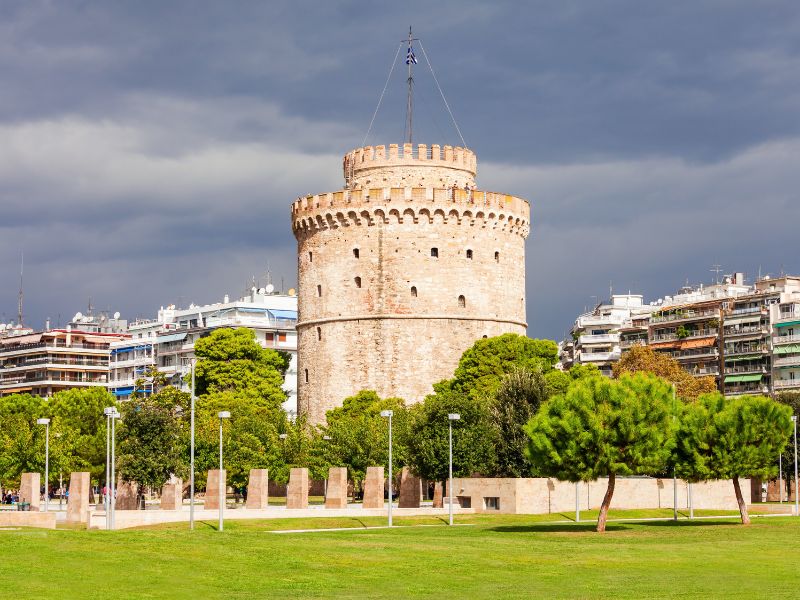
In antiquity, the waterfront sat much deeper inside the urban core. The White Tower’s location once marked the actual edge of the water.
Daily life touched the coastline constantly:
Back then, the sea wasn’t a backdrop — it was part of the city’s bloodstream. Slowly, though, natural deposits and human construction pushed the water outward, altering both geography and the way people lived beside it.
When the Ottomans captured Thessaloniki in 1430, they accepted the Byzantine street plan but gradually reshaped the waterfront. The most famous addition, of course, was the White Tower — built in the late 1400s as a coastal fortress and a place to keep watch over maritime activity.
Over time, the area became more controlled and militarized. Warehouses, customs posts, and defensive structures lined much of the coast, limiting public access. For many residents, the sea became something to look at from behind walls, not a place to stroll or gather.
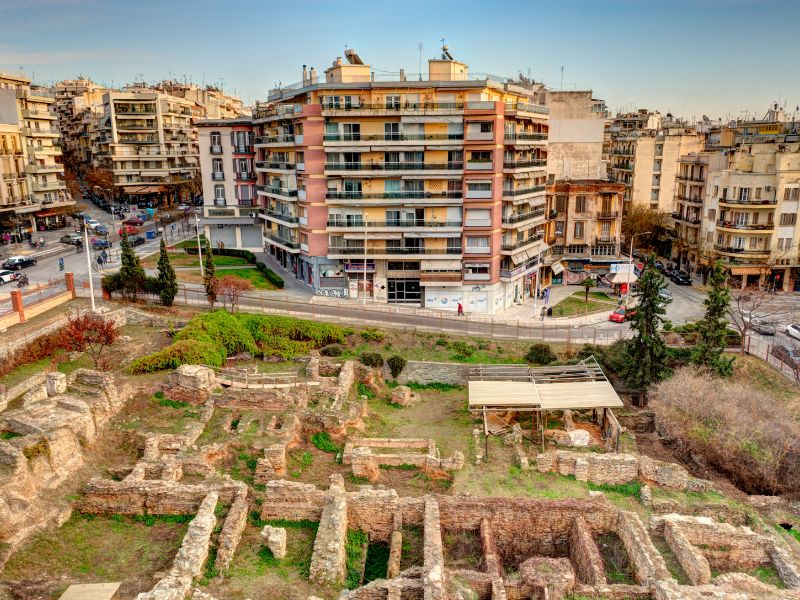
By the late 19th and early 20th century, Thessaloniki was entering a new phase — industrial growth. That brought prosperity but also transformed the coastline into a hard-working zone full of cranes, shipyards, and rail tracks.
Large sections of the bay looked like this:
Older residents often describe a coastline that people avoided, not enjoyed. Leisure by the water simply didn’t exist as an idea.
The turning point came much later, when architects, citizens, and local planners started asking a simple question:
Why shouldn’t Thessaloniki be close to its sea again?
The answer emerged through the ambitious New Waterfront redevelopment project (2000s–2010s). It completely reshaped public space along the bay.
The transformation included:
The city opened itself to the sea — physically and emotionally — for the first time in decades.
The New Waterfront earned international recognition from the International Federation of Landscape Architects in 2014 for successfully blending modern design with the long history of Thessaloniki.
A simple stroll along the promenade becomes a walk through centuries:
The redesign intentionally uses natural materials like stone, wood, and weathering steel so the landscape ages gracefully — just like the city itself.
Nothing here is random. Curved benches mimic waves. Pools of water reflect the sky as ancient fountains once did.
Today’s coastline is more than a pleasant walkway. It represents a shift in identity — a conscious reconnection with the past.
It symbolizes:
In a city famous for its Roman market, Byzantine walls, Ottoman houses, and Jewish heritage, the New Waterfront somehow ties it all together.
The history of Thessaloniki isn’t only carved in monuments. Sometimes it’s found in open space — in the breeze, the light, the steps of people walking toward the horizon.
The waterfront tells a story of:
To walk the promenade is to feel Thessaloniki rediscovering itself — one wave, one sunset, one quiet moment at a time.
We use cookies to improve your experience on our site. By using our site, you consent to cookies.
Manage your cookie preferences below:
Essential cookies enable basic functions and are necessary for the proper function of the website.
Stripe is a payment processing platform that enables businesses to accept online payments securely and efficiently.
Service URL: stripe.com (opens in a new window)
WooCommerce is a customizable eCommerce platform for building online stores using WordPress.
Statistics cookies collect information anonymously. This information helps us understand how visitors use our website.
Google Analytics is a powerful tool that tracks and analyzes website traffic for informed marketing decisions.
Service URL: policies.google.com (opens in a new window)
SourceBuster is used by WooCommerce for order attribution based on user source.
You can find more information in our Privacy Policy and Privacy Policy.