
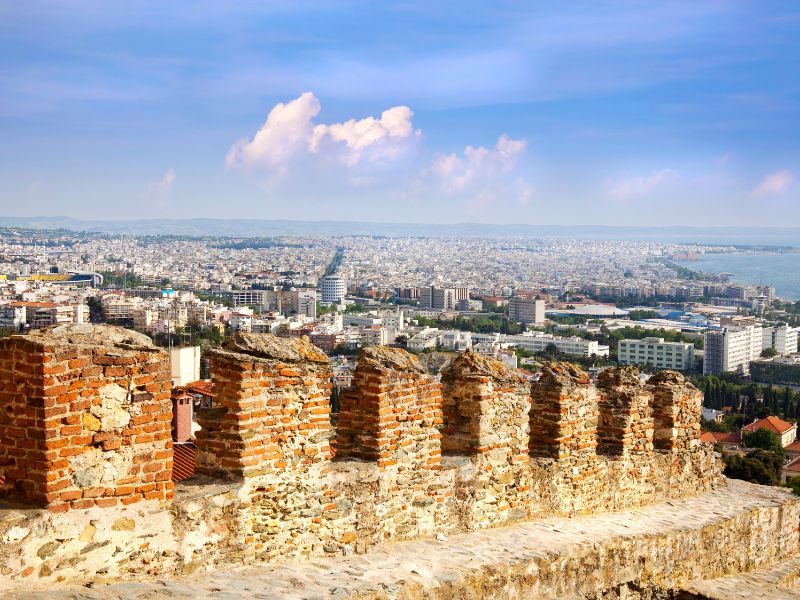
The Origins of Thessaloniki begin more than two thousand years ago, during a time when the ancient world was changing quickly.
Alexander the Great had just died, leaving behind a vast empire with no clear successor. His generals soon began fighting for control of different territories. This chaotic period is known today as the Wars of the Diadochi.
Amid that uncertainty, one of those generals made a decision that would shape the future of northern Greece. Cassander founded a new city along the shores of the Thermaic Gulf in 315 BCE.
At the time it was a strategic move meant to strengthen his rule in Macedonia. But the settlement he created would grow into a city that survived empires, wars, and centuries of change.
After Alexander’s death in 323 BCE, his empire quickly fragmented.Different generals attempted to control different regions, and Macedonia itself became a center of political rivalry. Cassander eventually secured power in the area, but maintaining that control required more than military strength.
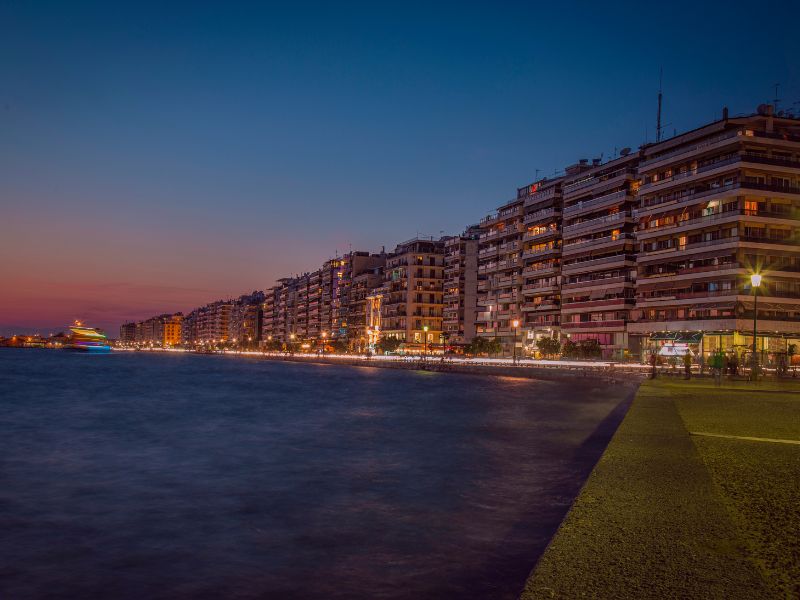
Founding a strong urban center could stabilize the region.The coastline of the Thermaic Gulf offered an obvious advantage. Ships could reach the harbor easily, and important land routes connected the area with the Balkans and inland Macedonia.
There was another practical detail.Several small settlements already existed nearby. Instead of abandoning them, Cassander united these communities and organized them into a single city.That moment marked the beginning of Thessaloniki.
The name of the new city carried symbolic meaning. Cassander named it after his wife, Thessalonike. She was the daughter of Philip II of Macedon and the half-sister of Alexander the Great. Her name itself had a story behind it.
According to historical tradition, Philip II named his daughter Thessalonike to celebrate a victory in Thessaly. The name can roughly be translated as “Victory of Thessaly.” By giving the city this name, Cassander connected his new foundation to the powerful Macedonian royal dynasty.
From the beginning, the city followed the urban planning traditions of the Hellenistic world. Many cities founded during that era used the Hippodamian grid system. Streets were arranged in straight lines, forming organized blocks and public squares.
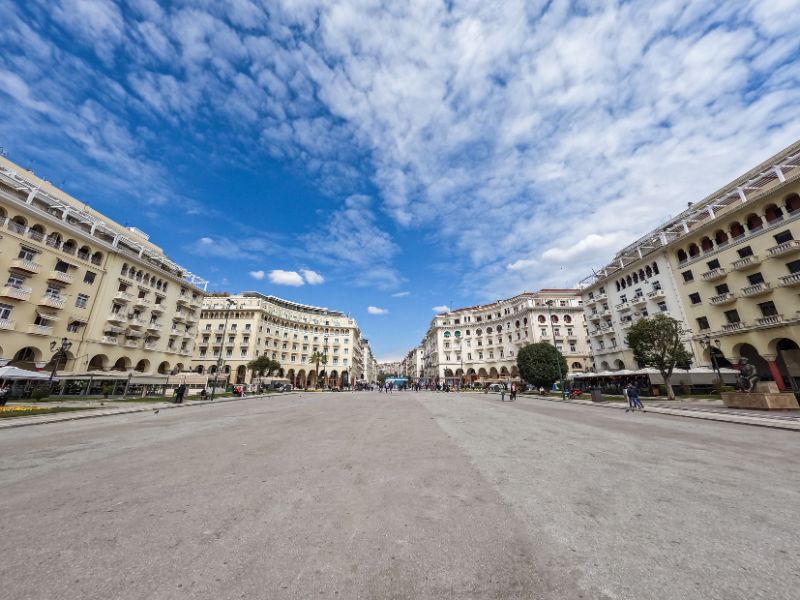
At the center of Thessaloniki stood the agora. This open space served as the heart of daily life. Merchants sold goods there, citizens gathered to talk, and political discussions often took place in the same square. Around it, temples, administrative buildings, and workshops gradually appeared.
Meanwhile, the harbor continued to grow. Ships arriving from across the Aegean brought products, travelers, and ideas into the young city.
Over time, the city became increasingly important in the region. Its harbor connected Thessaloniki with Mediterranean trade routes, while inland roads linked it with Macedonia and the Balkans.
Merchants passed through regularly. So did soldiers, travelers, and government officials moving between cities. Because of this constant movement, Thessaloniki slowly developed into a crossroads between northern Greece and the wider Mediterranean world.
The Origins of Thessaloniki during the Macedonian era prepared the city for an even larger role later. When the Romans expanded into Macedonia in the second century BCE, Thessaloniki was already a thriving urban center. Its location made it especially valuable.
The construction of the Via Egnatia strengthened that role dramatically. This famous Roman road crossed the Balkans and connected the Adriatic Sea with Byzantium. Thessaloniki stood directly along that route, turning the city into an important transportation and commercial hub.
Centuries later, Roman monuments such as the Rotunda and the Arch of Galerius would reflect that growing importance.
Understanding The Origins of Thessaloniki helps explain how the city became one of the most influential urban centers in southeastern Europe. What began as a strategic foundation by Cassander gradually evolved into something much larger.
Across the centuries Thessaloniki became a Roman metropolis, later the second city of the Byzantine Empire, and eventually a multicultural port during the Ottoman era. Today the modern city still carries traces of those early beginnings.
More than two thousand years after its foundation, the story that started with Cassander continues to shape Thessaloniki’s identity.
We use cookies to improve your experience on our site. By using our site, you consent to cookies.
Manage your cookie preferences below:
Essential cookies enable basic functions and are necessary for the proper function of the website.
Stripe is a payment processing platform that enables businesses to accept online payments securely and efficiently.
Service URL: stripe.com (opens in a new window)
WooCommerce is a customizable eCommerce platform for building online stores using WordPress.
Statistics cookies collect information anonymously. This information helps us understand how visitors use our website.
Google Analytics is a powerful tool that tracks and analyzes website traffic for informed marketing decisions.
Service URL: policies.google.com (opens in a new window)
SourceBuster is used by WooCommerce for order attribution based on user source.
You can find more information in our Privacy Policy and Privacy Policy.