
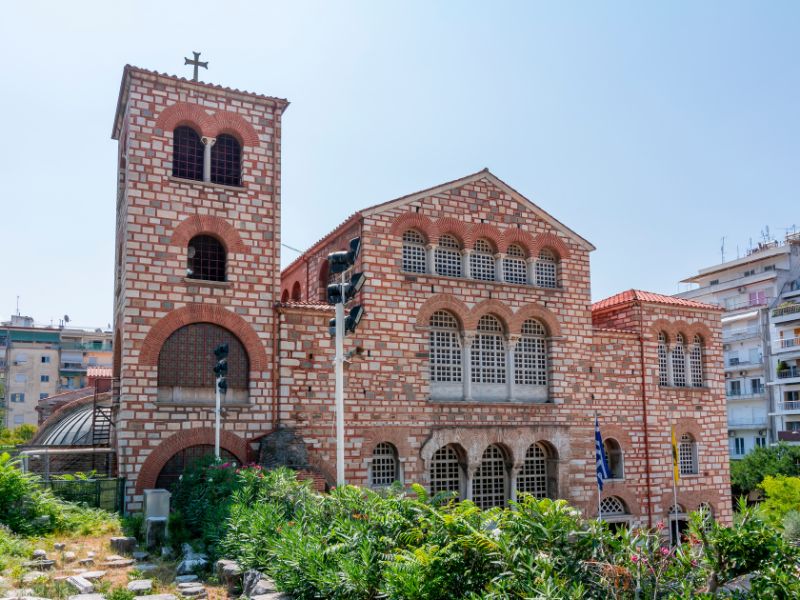
For centuries, Thessaloniki played a central role in the history of the Byzantine Empire. After Constantinople, it was often regarded as the empire’s second most important city. Why did Thessaloniki become so influential during the Byzantine period?
Part of the answer lies in its location. The city stood between the Balkans and the Aegean Sea, in a place where land routes and sea routes naturally met. Travelers moving across the region passed through Thessaloniki, while ships connected the city with the wider Mediterranean world. Trade followed these routes. So did ideas, cultures, and people.
Gradually, Thessaloniki developed into a major political, economic, and religious center of the Byzantine Empire. Its importance continued for many centuries. Even today, walking through the city, it is easy to notice how much of Thessaloniki’s historic character comes from this Byzantine past.
During the Byzantine era, Thessaloniki was also an important defensive stronghold. One reason was the city’s position along the famous Via Egnatia. This ancient road connected the western provinces of the empire with Constantinople and remained one of the main communication routes of the region.
Whoever controlled Thessaloniki controlled an important passage across the Balkans. Because of this strategic value, the city needed strong protection. Large defensive walls surrounded Thessaloniki and helped protect it during the unstable centuries of the Middle Ages.
These fortifications proved essential. Over time the city faced several invasions and sieges, yet the walls helped it survive many of them. Sections of these Byzantine walls still exist today. Visitors who walk through the upper city can still see parts of these ancient defenses rising above the modern streets.
Religion played an important role in the life of Byzantine Thessaloniki. The city became especially associated with its patron saint, Saint Demetrius. According to Christian tradition, Demetrius was a Roman officer who was executed in Thessaloniki during the early persecutions of Christians.
Over the centuries he became one of the most revered saints of the Byzantine world. A large church was eventually built in his honor. The Church of Saint Demetrius stands on the site where the saint was believed to have been imprisoned and martyred.
Pilgrims traveled from different regions to visit the church and honor the saint. Today, the building remains one of the most important religious monuments in Thessaloniki.
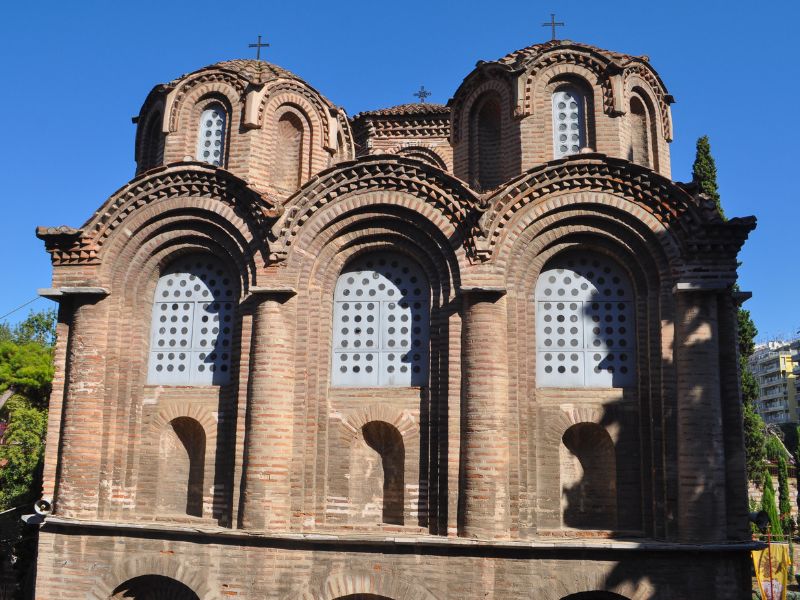
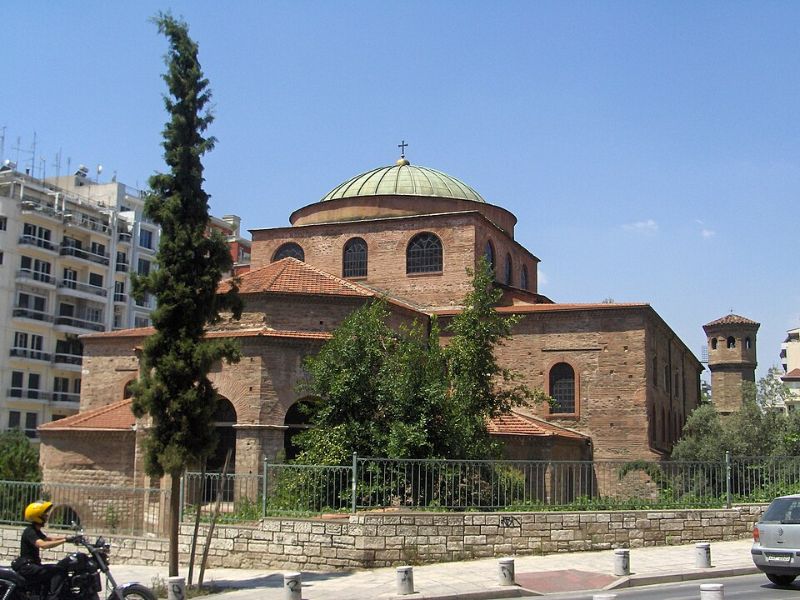
One of the most remarkable features of Thessaloniki is the number of Byzantine churches that have survived. Many of these buildings date back several centuries and reflect the architectural traditions of the Byzantine world. Domes, brickwork, arches, and colorful mosaics are characteristic elements of these churches.
Several of them are now recognized as UNESCO World Heritage monuments.
Among the most notable examples are:
Together, these monuments reveal the artistic and spiritual life that once flourished in Byzantine Thessaloniki.
While religion shaped much of the city’s identity, Thessaloniki was also a busy commercial center. Its harbor connected the city with important trade networks across the Mediterranean. Merchants arriving by sea brought goods from many regions, including textiles, metals, agricultural products, and luxury items.
Trade helped the city prosper. At the same time, Thessaloniki developed into a place where scholars, clergy, and artists contributed to Byzantine cultural life. The city became known for its intellectual and spiritual traditions. Life in Thessaloniki was active and constantly evolving.
Despite its strength, Thessaloniki experienced many challenges during the Byzantine centuries. Different groups attacked the city at various times. Slavic tribes moved into the Balkans during the early medieval period, and later the expansion of Ottoman power created new threats in the region.
These events revealed how important the city remained. The defensive walls often made the difference. They allowed Thessaloniki to resist several attacks and continue functioning as a Byzantine stronghold for many centuries.
The Byzantine chapter of Thessaloniki’s history came to an end in 1430, when the city was conquered by the Ottoman Empire. This marked the beginning of a new historical period.
Yet the Byzantine legacy did not disappear. Churches, fortifications, and monuments built during those centuries still stand throughout the city. They continue to remind visitors that Thessaloniki was once one of the great urban centers of the Byzantine world.
We use cookies to improve your experience on our site. By using our site, you consent to cookies.
Manage your cookie preferences below:
Essential cookies enable basic functions and are necessary for the proper function of the website.
Stripe is a payment processing platform that enables businesses to accept online payments securely and efficiently.
Service URL: stripe.com (opens in a new window)
WooCommerce is a customizable eCommerce platform for building online stores using WordPress.
Statistics cookies collect information anonymously. This information helps us understand how visitors use our website.
Google Analytics is a powerful tool that tracks and analyzes website traffic for informed marketing decisions.
Service URL: policies.google.com (opens in a new window)
SourceBuster is used by WooCommerce for order attribution based on user source.
You can find more information in our Privacy Policy and Privacy Policy.