
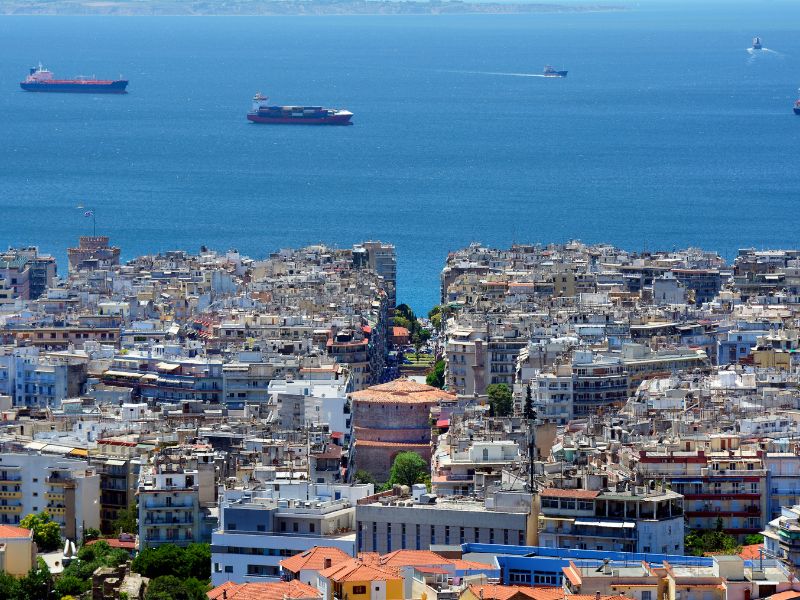
For several centuries, Thessaloniki was home to one of the most important Jewish communities in Europe. The arrival of Sephardic Jews at the end of the 15th century changed the character of the city in a profound way. Within a relatively short time, Thessaloniki became one of the most vibrant multicultural centers of the Ottoman Empire.
The influence of the Jewish population was so strong that the city eventually earned a remarkable nickname.The “Jerusalem of the Balkans.” For generations, Jewish communities played a central role in the economic, cultural, and intellectual life of Thessaloniki.
The story of the Sephardic Jews in Thessaloniki begins in 1492. That year, the Catholic monarchs Ferdinand II of Aragon and Isabella I of Castile issued a decree ordering Jews to leave Spain. Thousands of Jewish families suddenly found themselves forced to abandon their homes.
Many of them searched for refuge elsewhere. The Ottoman Empire offered one possible destination. Ottoman authorities allowed Jewish refugees to settle in several cities across the empire. A significant number chose Thessaloniki.
The city already had a busy port and strong commercial connections across the Mediterranean, making it an attractive place to begin again.
After arriving in Thessaloniki, the Sephardic Jews quickly organized their communities. They brought with them traditions, religious practices, and professional skills developed over generations. Their language was Ladino, a form of medieval Spanish mixed with Hebrew and other influences.
Over time the Jewish population grew rapidly. By the 16th century, Jews formed a large portion of the inhabitants of Thessaloniki. Their presence became one of the defining features of the city.
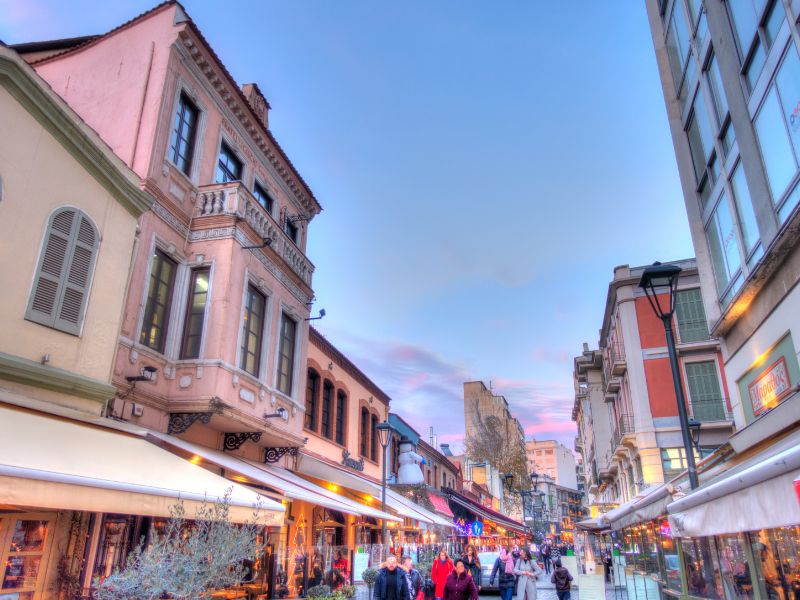
The Jewish community contributed greatly to the development of Thessaloniki. Many Jewish residents were active in trade, manufacturing, and maritime commerce. Their commercial networks connected the city with important markets across the Mediterranean.
But their influence extended beyond business. The community established schools, religious institutions, printing presses, and charitable organizations. These institutions helped create a lively intellectual environment. Little by little, Thessaloniki became an important center of learning and culture within the Ottoman world.
During the Ottoman centuries, Jewish neighborhoods formed a significant part of Thessaloniki’s urban landscape.Numerous synagogues were built throughout the city. Many of them reflected the geographic origins of the communities that founded them.
Some congregations were connected to families from Spain, others from Portugal or Italy. Although many of these buildings no longer survive today, their presence shaped the daily life of the city for generations.

The long history of the Jewish community in Thessaloniki changed dramatically during the Second World War. In 1943, Nazi occupation authorities began deporting the city’s Jewish population to concentration camps, including Auschwitz-Birkenau.
Most of those deported never returned. Within a short period of time, a community that had existed for more than four centuries was almost entirely destroyed.
Today, efforts continue to preserve the memory of Thessaloniki’s Jewish past. Museums, historical institutions, and memorials document the story of the Sephardic community that once flourished here. One important institution is the Jewish Museum of Thessaloniki, which preserves documents, photographs, and artifacts from the city’s Jewish history.
Visitors exploring Thessaloniki can still discover traces of this heritage. It remains an essential part of the city’s historical identity.
We use cookies to improve your experience on our site. By using our site, you consent to cookies.
Manage your cookie preferences below:
Essential cookies enable basic functions and are necessary for the proper function of the website.
Stripe is a payment processing platform that enables businesses to accept online payments securely and efficiently.
Service URL: stripe.com (opens in a new window)
WooCommerce is a customizable eCommerce platform for building online stores using WordPress.
Statistics cookies collect information anonymously. This information helps us understand how visitors use our website.
Google Analytics is a powerful tool that tracks and analyzes website traffic for informed marketing decisions.
Service URL: policies.google.com (opens in a new window)
SourceBuster is used by WooCommerce for order attribution based on user source.
You can find more information in our Privacy Policy and Privacy Policy.